
Before you assess: light, sleeve, and both sides
Artificial light with a warm yellow cast easily hides scratches and whitening, or creates reflections that look like flaws. If possible, use daylight or a bright, neutral light source, and slowly tilt the card back and forth instead of only looking at it head-on. Most scratches and clouding only become visible when light moves across the surface.
Take the card out of a tight or already worn sleeve for the inspection. Pressure marks from an old sleeve are easily mistaken for real scratches, and a rough sleeve can leave fine whitening-like lines even on an undamaged card.
Always check both sides. The front shows scratches, whitening, and colour loss most clearly, while the back, because of its uniform pattern, often reveals centering, fine creases, and dents first.
The seven conditions from Mint to Poor
We use the same English condition scale that is standard across the TCG scene. For each condition you look at five attributes individually (corners, edges, surface, centering, and possible creases) and form an overall picture from them. A single weak attribute usually pulls the overall condition down, even if the rest of the card looks better.
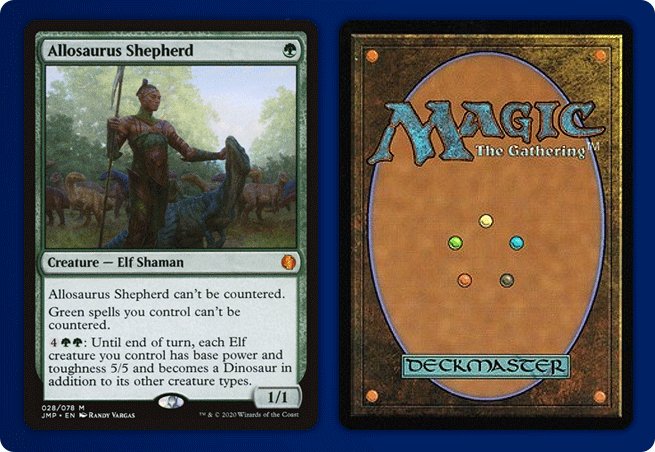
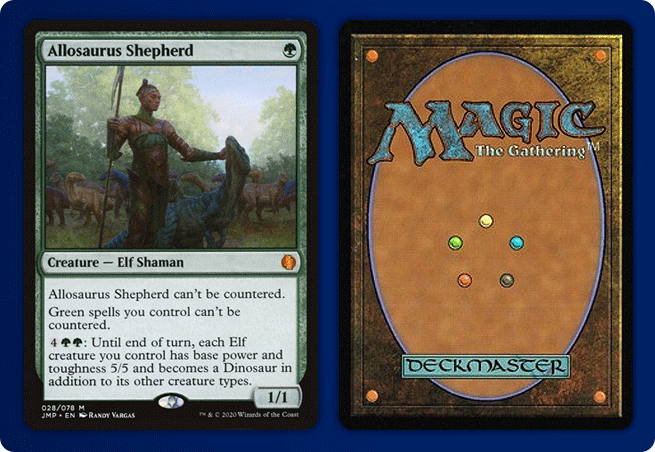
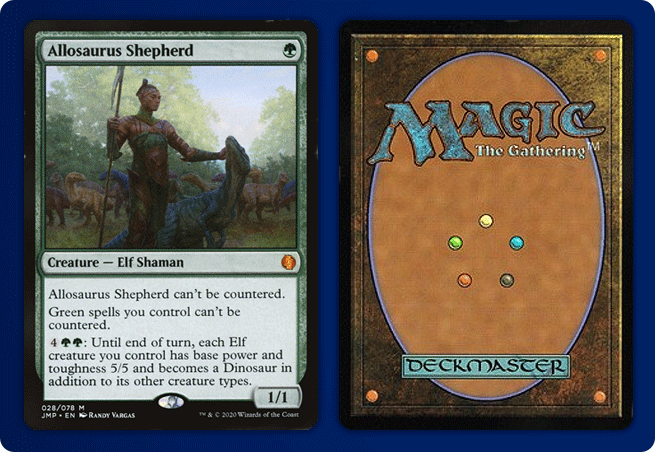
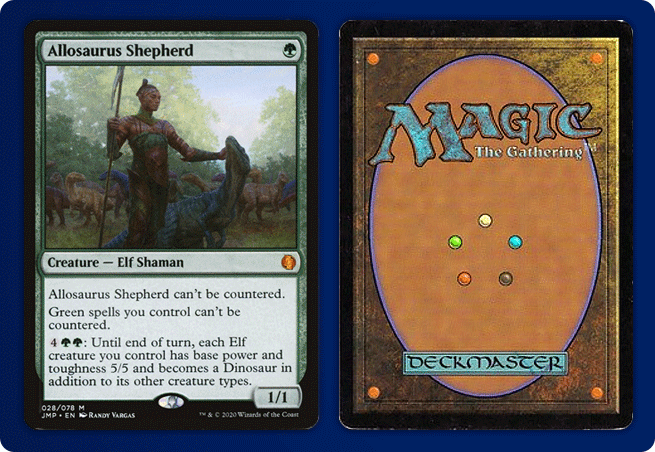
The example photos show a Magic: The Gathering card, not a Pokémon card. The criteria for corners, edges, surface, and centering apply regardless of the card game, and this way the same physical card can be shown in all seven conditions side by side.
Mint (MT)
Under normal light, the card shows no visible wear at all.
- Corners
- All four corners are razor sharp, with no wear, no whitening and no slight rounding.
- Edges
- Edges are smooth and evenly coloured throughout, with no nicks or roughened spots.
- Surface
- The surface is free of scratches, whitening, or clouding; the gloss is even across the whole card.
- Centering
- Centering is close to ideal – the borders look symmetrical left/right and top/bottom.
- Creases
- No creases or dents, even when tilting the card against the light.
Near Mint (NM)
Only very small deviations from flawless condition, visible on close inspection.
- Corners
- Corners still look sharp at first glance; only up close does at most one corner show a tiny bit of wear.
- Edges
- Edges are clean almost throughout, with at most one barely noticeable irregularity in one place.
- Surface
- When tilted in the light, at most a minimal hint of wear can be made out, with no continuous scratches.
- Centering
- Centering may deviate slightly from the middle, without any border looking conspicuously narrow.
- Creases
- No visible or tangible creases.
Excellent (EX)
Light wear is visible on inspection, but the card remains presentable overall.
- Corners
- One or more corners show light, visible wear or a slightly rounded tip.
- Edges
- Edges show small chips or a thin light line, but remain intact overall.
- Surface
- Occasional fine scratches or slight clouding are possible; the overall impression stays tidy.
- Centering
- Centering may be visibly, but not extremely, shifted to one side.
- Creases
- No hard creases; at most a barely perceptible waviness is still consistent with this condition.
Good (GD)
Clear signs of use on corners and edges are plainly visible.
- Corners
- Several corners show visible rounding, whitening, or light fibre wear.
- Edges
- Continuous light wear, partly with visible light lines over a longer stretch.
- Surface
- Several scratches, visible whitening, or a noticeable dulling of the gloss are possible.
- Centering
- Centering may be clearly shifted to one side.
- Creases
- A light but clearly visible crease mark is possible, without damage to the structure of the card.
Light Played (LP)
The card is fully intact and playable, but looks visibly used.
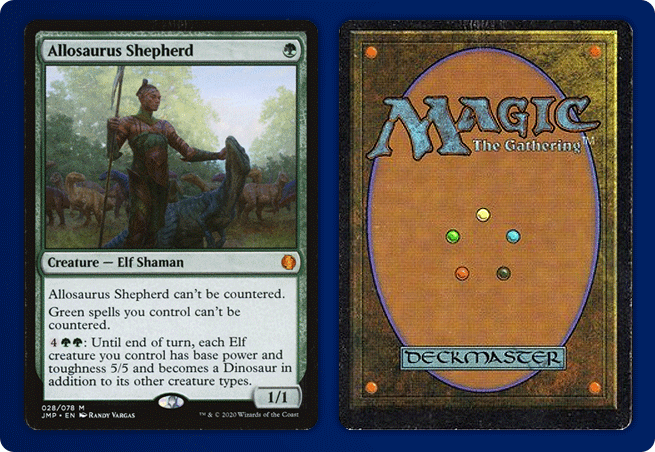
- Corners
- Several corners are rounded or slightly dented, with clear wear.
- Edges
- Continuous wear with visible light streaks and minor nicks.
- Surface
- Several clear scratches, whitening, or a noticeably worn coating are visible.
- Centering
- Centering can deviate strongly; one border can be clearly narrower than the opposite one.
- Creases
- One or more light to medium creases are present, but the card remains complete and without tears.
Played (PL)
Clear, partly heavy signs of use, but the card remains a complete piece.
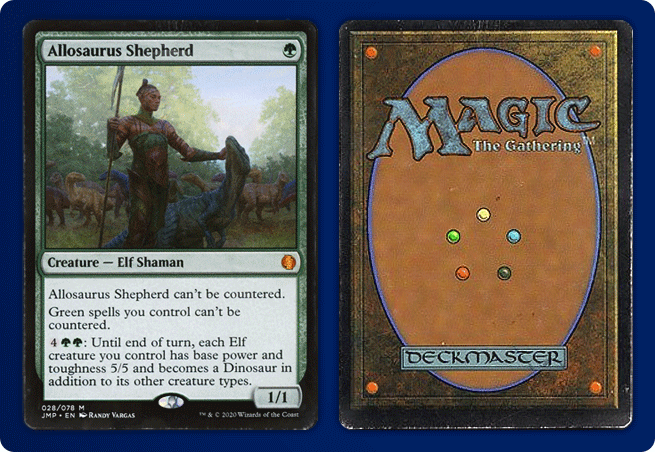
- Corners
- Corners are heavily rounded, dented, or torn, with material missing in places.
- Edges
- Heavy, continuous wear with visible nicks and loss of colour.
- Surface
- Larger scratches, clear whitening areas, or a visibly damaged coating.
- Centering
- Often heavily shifted; one border can almost disappear entirely.
- Creases
- Several clear creases or a more severe break in the card surface, but the card still holds together completely.
Poor (PO)
Damage beyond normal signs of use, or a recognisable alteration of the card.
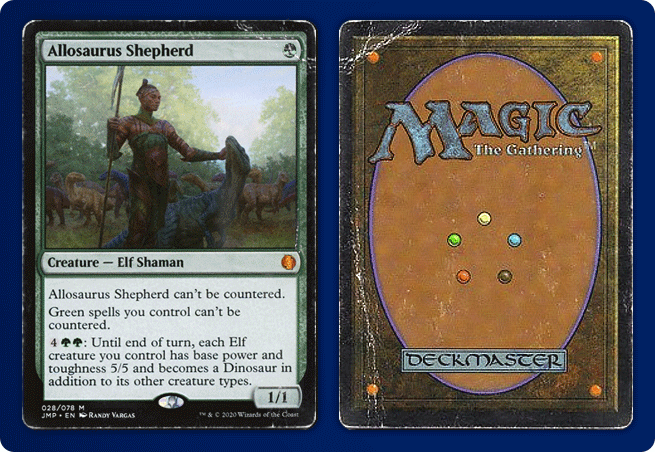
- Corners
- Corners can be torn, heavily dented, or partly broken off.
- Edges
- Clear tears, missing pieces, or heavy discolouration are possible.
- Surface
- Larger tears, water stains, heavy discolouration, or signs of deliberate alteration such as inked or lightened edges and trimmed borders.
- Centering
- Usually plays a minor role in this condition compared with the damage itself.
- Creases
- Heavy, multiple creases, a break in the card structure, or tears belong in this category.
Your estimate and our inspection on arrival
When you create your card list, you state your own condition for each card. An honest estimate is enough; nobody expects an expert appraisal. This estimate feeds into your first offer.
On arrival, we inspect every card using the system from this guide: corners, edges, surface, centering, and creases, under neutral light and on both sides. If our assessment matches your estimate, the agreed price stands.
If the condition differs, you receive a revised price with a clear explanation, never a silent reduction. You then decide again: accept, counter, or request the card back. Differences between your estimate at submission and the result of the physical inspection do happen. Go through the criteria in this guide beforehand.